 STD Help DubaiClear next steps. Considerate care.
Practical questions
A genital examination: consent and questions about options
Being offered a genital examination can raise questions about discomfort, privacy or previous difficult experiences. Ask why the examination is proposed and what it would add to the assessment. A conversation about consent should include the steps, options and implications of delay—not just a signature before undressing.
General information for adults. Not a substitute for medical assessment.
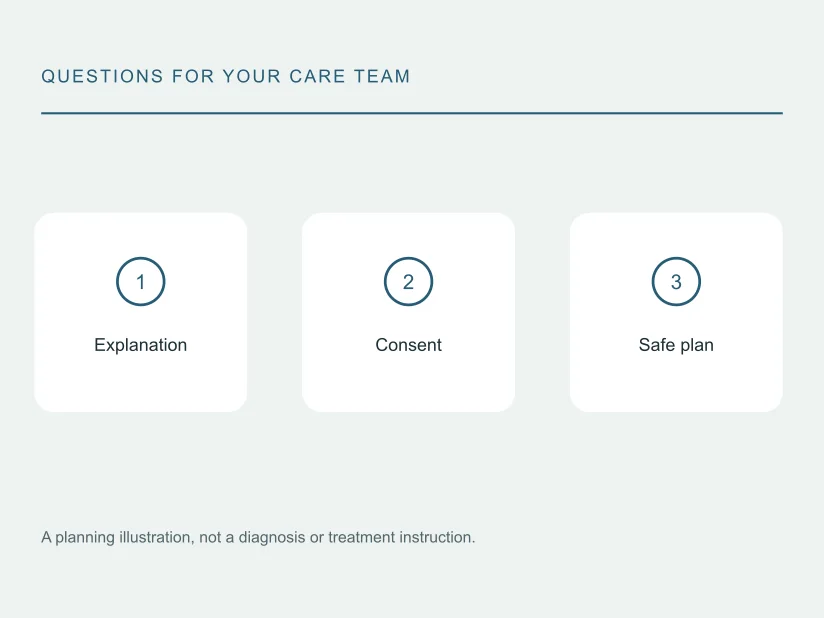
Ask what the clinician needs to assess
Ask which area would be examined, what contact or equipment is involved and whether discomfort is expected. Explain concerns that may make the examination difficult; you do not need to supply a detailed personal story to ask for a slower explanation. Professional guidance emphasises understandable information, privacy and checking consent. Ask how these principles will be put into practice in your visit and what findings cannot be assessed through conversation alone.
Source: GMC: intimate examinations, communication and chaperones
Discuss support, pauses and alternatives
Ask about a trained chaperone and whether a support person can also attend. They have different roles; a friend is not automatically an impartial clinical observer. Tell the clinician if you want to pause or stop and ask how to communicate this during the examination. Where an alternative specimen or assessment is possible, discuss its limits. A urine test or self-swab does not necessarily answer questions about a lesion, lump, pain or injury.
Source: GMC: intimate examinations, communication and chaperones
Keep a safe plan if the examination does not proceed
If you decide not to proceed at that visit, ask what remains uncertain, whether delay changes risk and what follow-up is available. Record any agreed return precautions rather than leaving with only a declined-examination label. Severe pain, major bleeding, urinary obstruction or significant illness may need urgent assessment and a different setting. This article explains discussion points, not a promise that every provider offers every alternative or that testing can always replace examination.
Source: GMC: intimate examinations, communication and chaperones
Common questions
Can I ask what each step involves?
Yes. Ask for a clear explanation before agreeing and during the examination.
Does a self-swab always replace an examination?
No. It may answer an infection question without assessing a lesion, injury or other cause of pain.
What if I need to stop?
Tell the clinician and ask for the examination to pause or stop, with a safe follow-up discussion.
Sources and information limits
Sources support general medical principles, not the UAE booking policies or service availability. Confirm instructions and local arrangements with the care provider. The update date does not claim clinician review.
- GMC: intimate examinations, communication and chaperones
- Dubai Health: patient communication, privacy and participation
Questions before arranging an appointment?
Enquire about the next steps and availability. An enquiry does not confirm a booking or diagnosis and is not an emergency service.