 STD Help DubaiClear next steps. Considerate care.
Practical questions
An unexpected STI-result message: verify the sender
An unexpected message claiming to contain an STI result can be alarming, particularly if it asks for urgent payment or login details. Verify the sender independently before opening a link or uploading identification. A convincing logo, correct name or professional wording does not prove that a message came from your healthcare service.
General information for adults. Not a substitute for medical assessment.
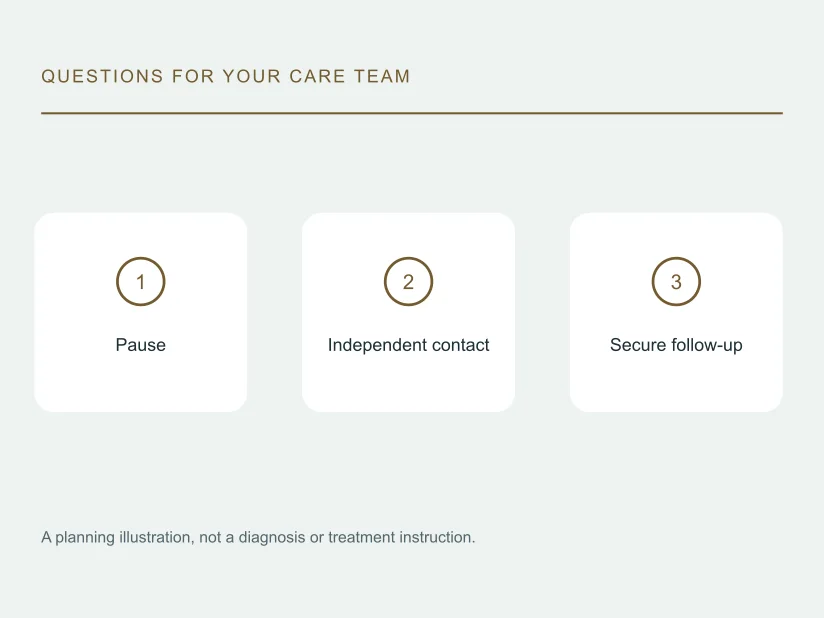
Pause before using the supplied link
Do not enter a password, one-time code, card details or a report through a link you have not verified. Messages can imitate a clinic, laboratory or insurer and exploit worry about a sensitive result. Urgency alone is not proof of fraud, but it is a reason to check deliberately. Keep enough of the message to explain the concern without posting your name, result or phone number in a public discussion.
Source: UK National Cyber Security Centre: verify suspicious messages
Use a contact route obtained independently
Contact the service through its official website, your established patient portal or previously verified appointment paperwork—not only the number in the suspicious message. Ask whether a result is pending, whether the message was sent and what secure route should be used. If you never attended that service, explain that fact. A misdirected genuine message and a scam require different responses, and neither allows you to diagnose yourself from its subject line.
Source: UK National Cyber Security Centre: verify suspicious messages
Respond to account exposure without ignoring real care
If you already supplied credentials, use the genuine account’s recovery and security process and contact the relevant service or bank through verified details as appropriate. Do not continue a suspicious conversation to negotiate deletion of a result. Separately arrange clinical review if the real service confirms a result needs attention. New symptoms or a time-sensitive exposure still need medical assessment; message verification is not a reason to postpone urgent care.
Source: UK National Cyber Security Centre: verify suspicious messages
Common questions
Does a correct name prove the message is genuine?
No. Verify through an independently obtained official contact route.
Should I send a one-time login code to verify identity?
Do not share account security codes with an unverified sender.
Can a suspicious message itself establish an STI diagnosis?
No. Confirm both the issuer and the actual clinical report.
Sources and information limits
Sources support general medical principles, not the UAE booking policies or service availability. Confirm instructions and local arrangements with the care provider. The update date does not claim clinician review.
Content policy and review statusQuestions before arranging an appointment?
Enquire about the next steps and availability. An enquiry does not confirm a booking or diagnosis and is not an emergency service.